-
How many drops are typically needed to achieve a solid black epoxy color?
The number of drops needed to achieve a solid black color in epoxy depends on the total volume being mixed and the desired intensity of color. For a standard 1:1 resin-to-hardener mix, achieving a deep black tone usually requires careful, incremental addition of the pigment, often starting with one to two drops per ounce of epoxy. Adding too much pigment at once can result in uneven coloration or affect the epoxy’s performance. It is recommended to mix thoroughly after each addition to evaluate the color before adding more. Gradual addition allows control over opacity, ensuring a consistent, uniform black finish.
-
Will adding pigment affect the curing time of the epoxy?
Yes, adding pigment to epoxy can slightly affect the curing time depending on the type and amount of pigment used. Most pigments are formulated to be compatible with epoxy, but excessive addition can slow down or alter the chemical reaction between resin and hardener. Small amounts, typically a few drops per ounce, generally have minimal impact on curing time, allowing the epoxy to set and fully cure as intended. It is important to follow manufacturer recommendations for pigment ratios to avoid delays or incomplete curing. Gradual addition and thorough mixing ensure consistent color distribution while maintaining the proper chemical balance. Users should observe the working and set times after adding pigment to confirm that the epoxy still cures within the expected range.
-
Does the pigment change the strength or bonding performance of the epoxy?
When used in the recommended quantities, pigment generally does not significantly alter the strength or bonding performance of epoxy. Pigments are designed to integrate seamlessly with the resin and hardener, maintaining the chemical reaction that produces a solid, durable bond. Excessive pigment, however, can dilute the epoxy or interfere with curing, potentially reducing hardness or adhesion. To ensure maximum strength and bonding, it is important to follow the manufacturer’s guidelines for pigment amounts relative to the epoxy volume. Proper mixing ensures even color distribution and maintains the intended mechanical properties. When used correctly, adding pigment allows customization of color while preserving the epoxy’s structural integrity, durability, and ability to adhere to various materials.
-
Will the pigment interfere with sandability or paintability of the cured epoxy?
No, when used within recommended ratios, the pigment should not interfere with sanding or painting the cured epoxy. The pigment is fully integrated into the epoxy matrix during curing, resulting in a uniform surface that can be shaped, sanded, or coated just like unpigmented epoxy. Excessive pigment may create slight differences in hardness or texture, so following proper dosage ensures smooth sandability and paint adhesion. Once cured, pigmented epoxy can be sanded to remove imperfections or achieve the desired finish. It can also be painted with most standard coatings compatible with epoxy, allowing both aesthetic and functional enhancements. Proper application and curing maintain the balance between visual effects and performance, ensuring that adding pigment does not compromise workability or finish quality.
-
How should the 2 oz bottle be stored to maintain consistency?
The 2 oz pigment bottle should be stored in a cool, dry location, away from direct sunlight or heat sources, to maintain consistency and prevent clumping or degradation. Tightly sealing the cap after each use prevents exposure to air and moisture, which could affect pigment quality or shelf life. Keeping the bottle upright helps avoid leaks and ensures the pigment remains easily pourable. Avoid freezing temperatures, as extreme cold can alter the pigment’s dispersion properties. Proper storage allows for consistent color intensity and reliable performance when mixed with epoxy. Following these guidelines ensures that each use delivers the same reliable results, minimizing color variability and maintaining workability across multiple projects.
-
Is the pigment safe to use indoors, or does it require ventilation?
The pigment is generally safe for indoor use, but good ventilation is recommended to minimize inhalation of fine particles during handling. Avoid creating dust clouds or directly inhaling the pigment. Using a soft cloth or mixing tool helps reduce airborne particles. While the pigment is non-toxic in small quantities, proper ventilation ensures a safer working environment, especially in enclosed spaces or during prolonged use. Following these precautions allows users to work indoors while maintaining health and comfort, achieving consistent coloring without unnecessary exposure risks. Additionally, wearing a dust mask or respirator can further protect against accidental inhalation, especially during extended projects.
-
What happens if too much pigment is added to the epoxy mixture?
Adding too much pigment can negatively impact the epoxy mixture by altering curing time, viscosity, and mechanical strength. Excess pigment may slow or prevent full curing, resulting in a softer or tacky surface. It can also affect adhesion, potentially reducing the bond strength to the substrate. Over-pigmented epoxy may have uneven color distribution, creating streaks or inconsistencies. Sanding or painting may become more difficult if the surface is altered by excessive pigment. To avoid these issues, it is crucial to measure pigment carefully according to manufacturer recommendations and mix thoroughly. Gradual addition allows control over color intensity while preserving the epoxy’s structural and functional properties, ensuring a strong, durable, and visually consistent finish.
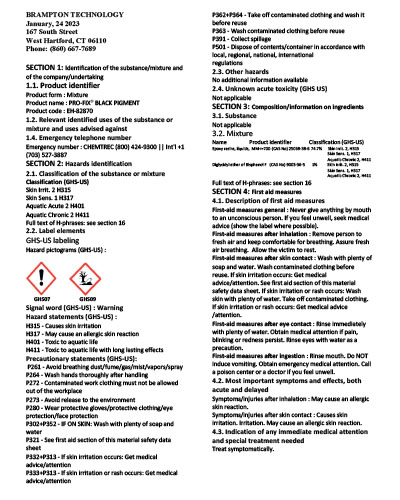
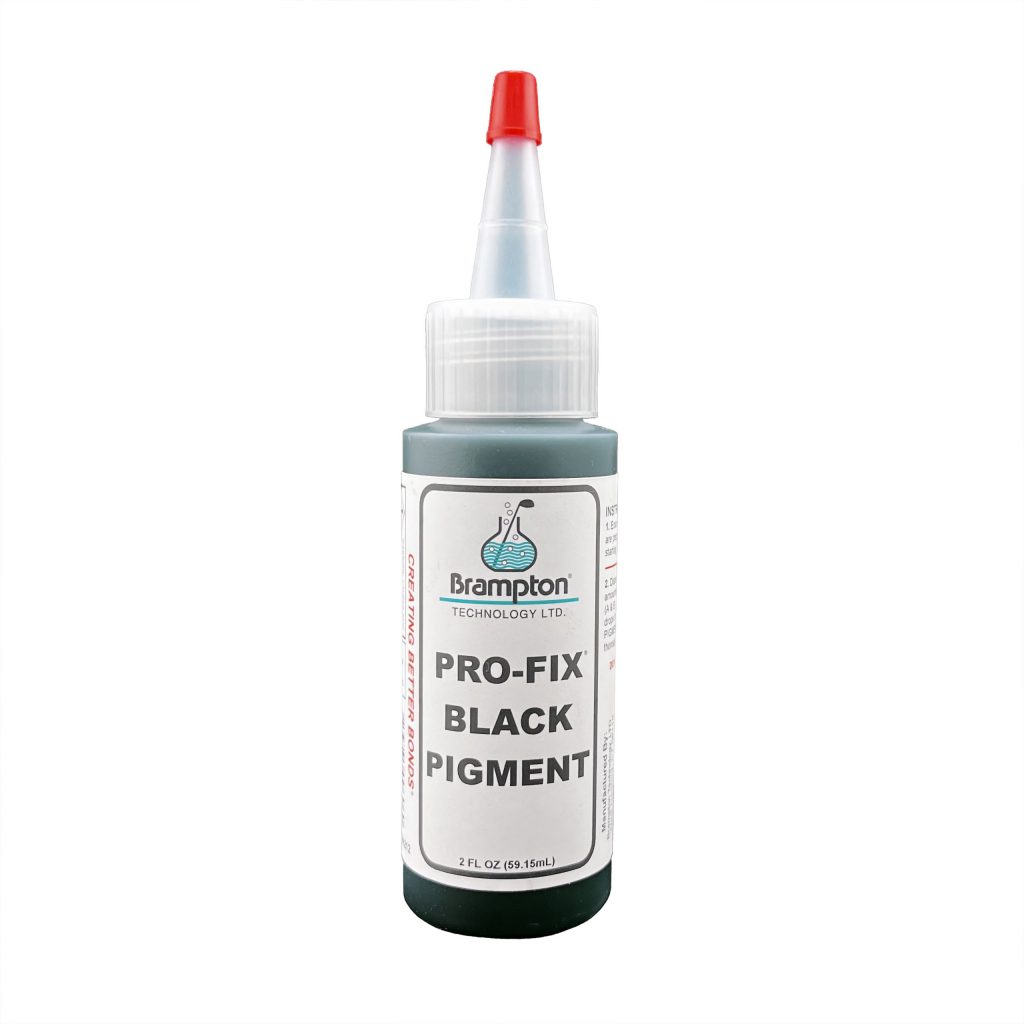
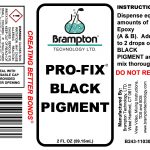
PRO-FIX® Black Epoxy Pigment
PRO-FIX® black pigment gives builders precise color control without complicating the epoxy process. This pigment blends smoothly into PRO-FIX® epoxies to deliver a solid black finish that complements ferrules and shafts for a clean, polished look.
Designed for club builders who value appearance and efficiency, this pigment integrates naturally into existing workflows. Minimal adjustments deliver noticeable results, and the epoxy behaves as expected throughout application and curing.
Description
PRO-FIX® Black Pigment for Golf Club Epoxy Applications
PRO-FIX® black pigment works with any PRO-FIX® epoxy to convert the mixed adhesive into a uniform black. Builders often prefer a black bond line because it visually blends with most ferrules and shaft finishes. This pigment helps the epoxy disappear into the build rather than stand out.
The formulation matches the resin used in Part A of PRO-FIX® epoxies, ensuring the pigment mixes evenly and predictably. A few drops go a long way, making color adjustments easy without altering how the epoxy handles during installation.
What Makes PRO-FIX® Black Pigment Different
Color additives can introduce uncertainty into epoxy performance. This product avoids that issue through material compatibility and controlled concentration.
The pigment disperses evenly throughout the epoxy mix, preventing streaking or color variation. Builders gain repeatable results across multiple clubs without trial and error. Consistent color helps present finished clubs that look intentional and refined.
The 2-oz bottle offers excellent value for shops and individual builders since each application requires only a small amount.
Simple Mixing Process
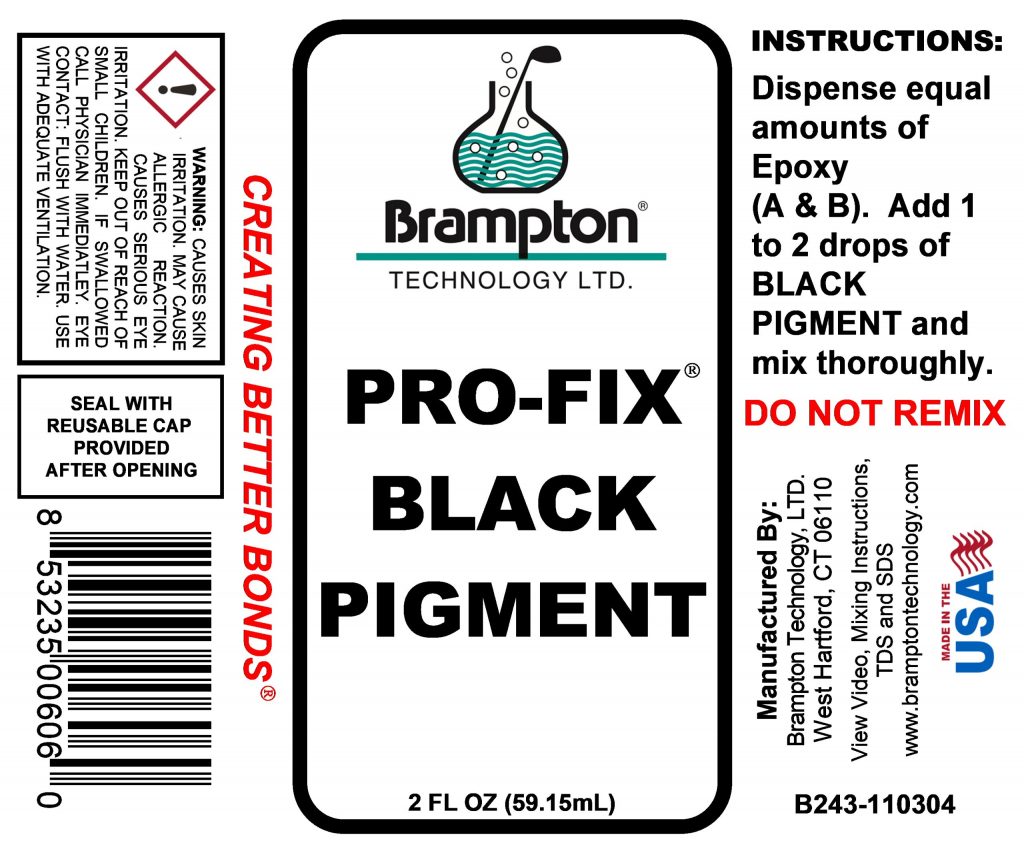
Add 1 to 2 drops of PRO-FIX® black pigment to Part A before combining Part A and Part B. Mix thoroughly until the color appears even and consistent. Adjust the number of drops slightly to fine-tune shade intensity, keeping additions minimal to maintain optimal epoxy behavior.
Finish with Confidence Using PRO-FIX® Black Pigment
Details define the final result. PRO-FIX® black pigment helps deliver clean bond lines that complement premium builds without adding complexity. This small addition delivers a noticeable improvement in presentation and consistency across all clubs.
At Brampton Technology, our product line includes PRO-FIX® epoxies, HF-100® grip solvent, regripping supplies, and epoxy solutions for marine and multi-purpose applications. Connect with us to discuss product selection or technical questions and take your next build further.