How To Correctly Use Epoxy Adhesives for Golf Club Repair
Epoxy adhesives, the unsung heroes of golf club maintenance, are instrumental in the longevity and reliability of your favorite clubs. These potent compounds ensure your club’s components stay firmly attached, delivering consistent performance on the greens, whether you’re on a relaxing weekend round or in the heat of a tournament. In this guide, we’ll delve into the art of using epoxy adhesives correctly for golf club repair, a skill that can save you both time and money.
What Are Epoxy Adhesives?
Epoxy adhesives are a type of thermoset plastic that forms an incredibly strong and durable bond when mixed with a hardening agent. These two-part adhesives contain one part epoxy resin, which is the actual adhesive, and one part hardener, which is the activator. When you mix these two components, a chemical reaction begins that causes the epoxy to harden, forming a rigid and highly durable bond resistant to heat, solvents, and mechanical forces.
Why Should You Use Them for Golf Club Repair?
The high-strength bond of epoxy adhesives makes them the ideal choice for golf club repair. Whether for fixing a loose clubhead, replacing a broken shaft, or assembling a new club, these adhesives ensure the golf club can withstand the impact of high-swing speeds. Epoxy can withstand the rigors of the game and has the resilience to endure varying weather conditions, from the sizzling heat of a summer’s day to the numbing cold of a winter morning.
Preparing the Surface for Epoxy Application
Before mixing and applying epoxy adhesive to your golf club, you have to prepare the surface. This step ensures the adhesive bonds strongly and lasts as long as possible.
First, start by cleaning the golf club. Remove any old adhesive, dirt, or grime from the clubhead and shaft. You can do this using denatured alcohol. However, make sure the club is completely dry before applying the epoxy.
Sanding the surface is another essential step. Use medium-grit sandpaper on steel shafts. On graphite shafts, use a utility knife or 150-grit sandpaper to roughen the areas where you’ll apply the epoxy. Sanding creates tiny grooves on the shaft’s surface, increasing the epoxy’s grip and ensuring a stronger bond.
Applying the Adhesive Correctly: A Step-by-Step Guide
Step 1: Mixing the Epoxy Adhesive
First, you need to prepare the epoxy adhesive. If you’re using a two-part epoxy consisting of the epoxy resin and the hardener, you’ll need to mix these together before application. In a disposable container, carefully dispense the recommended amounts of each component. Use a wooden stir stick to thoroughly mix these ingredients until they form a consistent mixture. Remember that the epoxy starts hardening as soon as you mix it, so be ready to use it immediately after mixing.
Step 2: Application
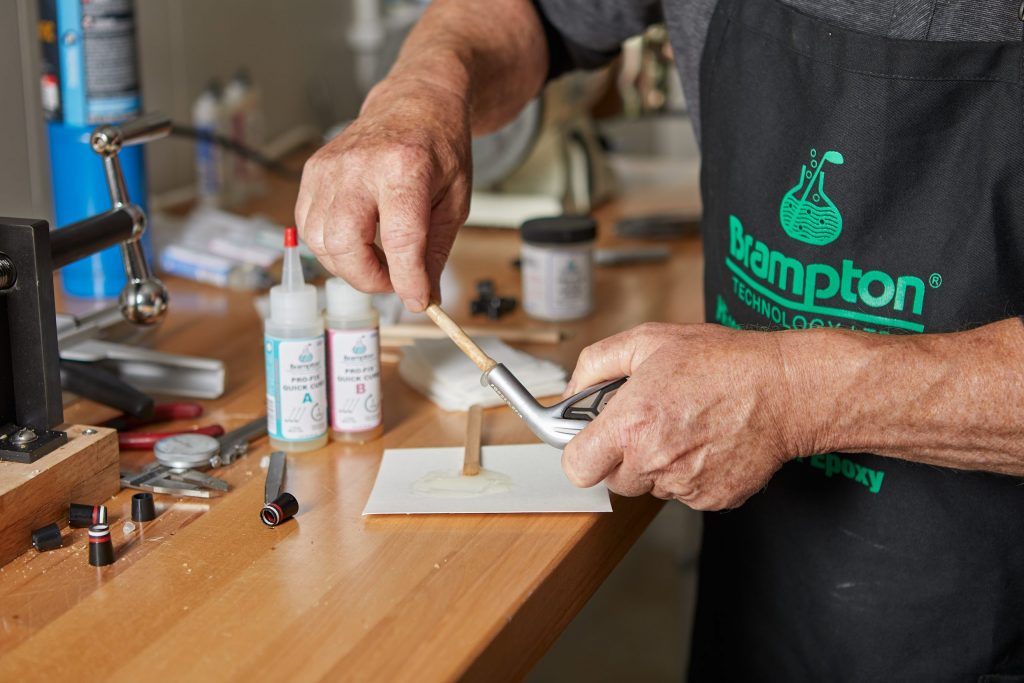
Once you’ve prepared your epoxy adhesive, apply it to both surfaces that need bonding. Use a small applicator such as a popsicle stick for the golf shaft and a dowel for the hosel of the golf club, ensuring you cover all areas uniformly. A thin, even layer of epoxy is usually more effective than a thick one, which may not bond as well.
Step 3: Connecting the Parts
Now that both surfaces have epoxy, it’s time to connect them. Carefully align the parts and join them together using a twisting motion. Apply some pressure to ensure better bonding.
Step 4: Wipe Away Excess Epoxy
When the golf club is joined together, some epoxy residue might ooze out from the sides. Wipe away this excess before it hardens using a clean, dry cloth or an alcohol wipe.
Step 5: Curing
Lastly, let the epoxy cure. The curing time depends on the type of epoxy adhesive you’ve used. Quick-set epoxy takes roughly 10 to 15 minutes, while slow-cure epoxy can take up to 24 hours. Letting the epoxy fully cure before using the club is crucial, as premature use may break the bond.
How To Clean Up After Application: What To Do and Not To Do
Now that you know how to correctly use epoxy adhesives for your golf club repair, it’s time to learn how to clean up and safely dispose of any excess materials. Proper cleanup after application is essential to maintain your club’s aesthetics and prevent any residues from interfering with your game.
Step 1: Clean Up Your Tools
You should clean all the tools you used during the repair immediately after use. If the epoxy hardens on these tools, removing it can be challenging and render the tools unusable. Use denatured alcohol to remove the excess epoxy from the tools. If the epoxy has begun to harden, you might need to use a scraper or putty knife to remove it.
Step 2: Clean Spilled Epoxy
In case any epoxy spills on your work surface, act fast. Wipe it up immediately with a cloth or paper towel. For hardened spills, use a plastic scraper or putty knife.
Step 3: Dispose of Used Materials Responsibly
After the repair and cleanup, dispose of the used materials responsibly. Get rid of your used epoxy containers, brushes, and so on by following your local waste disposal regulations. Epoxy adhesives can be environmentally damaging if you don’t dispose of them correctly, so do your part.
Things To Avoid During Cleanup
While knowing what to do during cleanup is essential, it’s equally important to know what not to do. Avoid using harsh solvents or chemicals, as they could damage your golf clubs or tools. Also, never attempt to clean up uncured epoxy without wearing appropriate protective gear, like gloves, eyewear, and masks—especially if you’re in a poorly ventilated area. Uncured epoxy can be harmful if it encounters your skin or if you inhale its fumes.
If you’re looking for epoxy that will last you swing after swing and round after round, shop at Brampton Technology. Our golf club repair epoxy stands out from the crowd in quality, reliability, and performance. It’s specifically designed to meet the rigorous demands of golf equipment, offering superior bonding strength that can withstand even the most forceful of swings.