
Epoxy Vs. Super Glue: What’s The Difference?

When it comes to bonding materials, adhesives come in many forms and strengths. Two of the most popular are epoxy and super glue. Both are common staples in workshops and homes across North America, yet they behave quite differently. If you’ve ever wondered which one suits your next project best, understanding their differences is essential.
In this article, we’ll break down epoxy vs. super glue, explaining how each works, where they perform best, and what to consider when making your choice.
What Is Epoxy?
Epoxy is a two-part adhesive made by mixing a resin with a hardener. Once combined, a chemical reaction occurs that creates a durable and long-lasting bond.
The process does not simply “dry” but rather cures. This means the adhesive hardens into a solid form through a thermosetting reaction. The result is an extremely strong bond often resistant to heat, chemicals, water, and wear.
Because epoxy requires mixing before use, it generally takes longer to set than other adhesives. The trade-off is a bond that holds up well under stress, making it a top choice for structural, industrial, and heavy-duty applications. You’ll often find epoxy used in woodworking, construction, marine repairs, and other demanding environments.
What Is Super Glue?
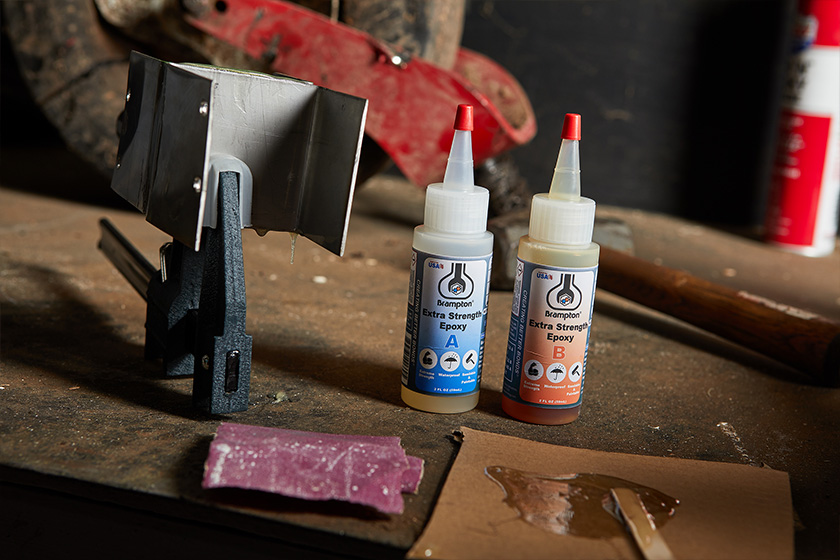
Super glue, technically called cyanoacrylate adhesive, is a fast-acting, single-part glue that bonds quickly to many materials.
It works by reacting with moisture in the air and on surfaces and forming a nearly instant bond. Most people recognize super glue for its convenience: apply a drop, press the pieces together, and the job is done.
This adhesive is popular in households and light-duty repairs. Whether fixing a broken figurine or sealing a split fingernail, super glue is easy to use and requires no mixing. However, although it cures fast, it is not always the best choice for load-bearing repairs or outdoor use.
Bond Strength and Durability
Strength is one of the biggest differences between epoxy and super glue. Epoxy forms a much stronger bond overall. Once cured, it withstands tension, impact, vibration, and exposure to the elements. This makes epoxy ideal for projects requiring a durable, permanent fix, even in tough conditions.
Super glue produces a quick bond that is more brittle. It works best on non-porous surfaces and smaller repairs. Over time, especially when exposed to moisture, heat, or impact, super glue bonds may weaken or fail. This does not mean it is ineffective but rather that it performs best within certain limits.
Setting Time and Working Time
One of super glue’s main advantages is its rapid setting time. In most cases, it grabs hold within seconds, with a full bond forming in minutes. This speed is perfect for quick fixes where time and precision are important.
Epoxy usually requires more patience. Depending on the formulation, you may have several minutes to an hour of working time, followed by a curing period that ranges from a few hours to a full day. This longer working time allows you to adjust positioning, align parts properly, and handle more complex projects.
Surface Compatibility
Super glue bonds well with non-porous surfaces such as plastic, metal, ceramic, and glass. While it can sometimes be used on porous materials, its effectiveness drops because the glue absorbs into the surface rather than bonding on top.
Epoxy excels at bonding both porous and non-porous materials. It penetrates deeply into porous substrates like wood or concrete and adheres strongly to metal, composites, and certain plastics. This versatility makes epoxy suitable for a wide variety of industries and DIY tasks.
Resistance to Elements
Exposure to heat, water, and chemicals is often a concern in repair and construction. Epoxy stands out here. Once cured, it resists moisture, solvents, and extreme temperatures. It maintains strength over time, even in outdoor or industrial environments.
Super glue works well in dry indoor settings but tends to degrade when exposed to water, humidity, or high heat. It is not the best option for outdoor projects, plumbing repairs, or anything subjected to heavy stress.
Safety and Application Considerations
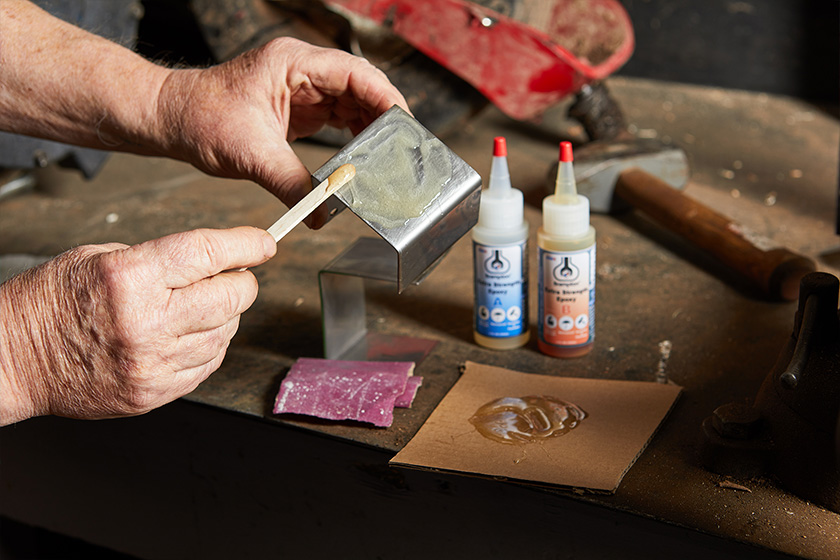
Both epoxy and super glue require careful handling. Super glue bonds skin almost instantly, and its fumes can irritate eyes and lungs in enclosed spaces. Wearing gloves and working in a well-ventilated area is important.
Epoxy needs thorough mixing to activate the chemical reaction. Many types emit a slight odor during curing, and skin contact should be avoided. For both adhesives, wearing safety goggles, gloves, and working in a clean space is advisable.
Repair Applications
For example, if you’re fixing a cracked ceramic mug, super glue may be more convenient, providing a quick, clean bond that suits the smooth surface. However, for tougher repairs such as a broken wooden chair leg or a metal joint, epoxy is better due to its strength and durability.
In summary, super glue works well for fast fixes and delicate items. Epoxy shines when strength, longevity, and precision are critical.
Shelf Life and Storage
Super glue generally has a shorter shelf life once opened. Exposure to moisture in the air can clog the nozzle or harden glue inside the bottle. Proper storage, such as keeping the bottle sealed, upright, and in a cool, dry place, can help prolong usability.
Epoxy tends to last longer, especially when stored in its original two-part containers. Since the resin and hardener stay separate until mixed, they degrade more slowly. This makes epoxy a dependable option for those who use adhesives in batches over time.
Which Adhesive Should You Choose?
The right choice depends on the task. For everyday household repairs, super glue often works quickly and effectively. Its simplicity makes it a favorite for casual users.
For complex projects or situations that demand strength under stress, epoxy is the preferred option. It is widely used in automotive, woodworking, marine, and metal fabrication work — industries where our customers at Brampton Technology rely on it every day.
As a family-owned business, we know quality matters. That is why we continue developing epoxy formulas that offer high performance, affordability, and benefit from our decades of experience. When strength matters most, our epoxy delivers.
Choosing between epoxy vs. super glue depends on your project’s nature. Are you looking for a quick fix or a structural bond? Repairing a toy or building furniture? Both adhesives have their place, and when used correctly, both can produce excellent results.
At Brampton Technology, we specialize in American-made epoxy products designed for professionals and hobbyists alike. We take pride in offering the right solutions backed by outstanding customer support and pricing that works.
Explore our full range of products and experience the difference they bring to your next repair or project.