
An Overview of the Fascinating History of Golf

Golf, a sport known for its elegance and precision, has a rich and storied history that spans centuries. From its origins, golf has evolved from a simple pastime into a globally celebrated phenomenon.
Whether you’re a seasoned pro or a curious beginner, understanding the heritage of golf adds a layer of appreciation to every swing and putt. The game’s journey from rudimentary tools and courses to modern-day tournaments and technology-driven equipment is nothing short of remarkable. In this article, we’ll explore the fascinating history of golf and the key milestones that have shaped it into the beloved sport it is today.

The Origins of Golf and the First Golf Course
The origins of golf are often traced back to 15th-century Scotland, where it was played on coastal dunes with primitive clubs and balls. St Andrews, recognized as the “Home of Golf,” has played an especially crucial role in the sport’s early development. The Old Course at St Andrews (and yes, there is no period after St in the name of this venerable course), frequently referred to as the world’s oldest golf course, is believed to have hosted games as early as 1552.
The earliest references to golf in Scotland highlight its explosive popularity, but Scottish Parliament banned it in 1457 because it interfered with citizens’ compulsory archery practice, a critical skill for national defense at the time. This intertwining of golf with Scotland’s cultural fabric has cemented its place as a cornerstone of Scottish heritage, and the Old Course remains a pilgrimage site for global golf enthusiasts. The rugged terrain, coastal winds, and natural landscape created a challenging yet beloved setting that shaped the rules and spirit of the game as we know it today.
The Establishment of the 18-Hole Standard
The establishment of the 18-hole course as the standard format for golf was a pivotal moment in the sport’s development. This practice began at St Andrew’s on October 4, 1764, when the course was shortened from 22 holes to 18 holes. Initially, the number of holes varied from course to course, but St Andrews’ decision to adopt an 18-hole layout gradually became the norm.
By the mid-19th century, the Royal and Ancient Golf Club of St Andrews, established in 1754 and one of golf’s most influential institutions, formally declared the 18-hole round as the standard. This standard paved the way for the creation of uniform rules and competitions, which later facilitated the sport’s expansion and internationalization.
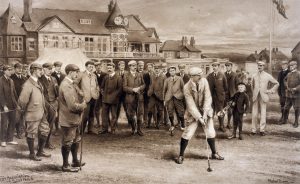
Arrival of Golf in England and France
As golf continued to gain prominence in Scotland, its appeal began to spread across borders, reaching England and France in the early 17th century. The game was introduced to England by Scottish nobles and soldiers, who played on makeshift courses in open fields and parklands. One of the earliest recorded courses in England was established at Blackheath in London in the 1600s, marking the beginning of golf’s enduring presence in the country.
Similarly, golf made its way to France, primarily through the influence of Mary, Queen of Scots, who spent time in France and is often credited with popularizing the game there. Her passion for golf and its Scottish roots resonated with the French nobility, leading to the construction of early courses in regions where elites could enjoy the sport. Over time, as the game’s popularity grew, both England and France adapted golf to their unique landscapes and cultural contexts. This would lay the foundation for the sport’s further expansion across Europe.
Development of the First Golf Societies
The rise of golf societies in the 18th century marked a significant advancement in the sport’s institutional organization. One of the earliest and most influential golf societies was The Honourable Company of Edinburgh Golfers, formed in 1744. This society was instrumental in the creation of standardized rules for the game, which would later become the foundation for modern golf regulations. Members of these early societies were predominantly well-to-do gentlemen who shared a passion for the sport and desired to cultivate a sense of camaraderie and competition among themselves.
The Royal and Ancient Golf Club of St Andrews also played a pivotal role in the organization’s formalization. Known simply as the R&A, this club governed the rules of golf in collaboration with The Honourable Company of Edinburgh Golfers and organized key tournaments that elevated the sport’s status.
These early societies were often centered around the premier courses of the time, such as St Andrews and Musselburgh. Their influence extended beyond social gatherings and competitive play; they contributed to the development of golf course architecture, introducing innovative designs that added complexity and strategy to the game. Through their efforts, golf societies laid the groundwork for the sport’s professionalization and global spread, cultivating a structured environment that enabled golf to thrive and evolve. The legacy of these pioneering groups is still evident in the thriving golf communities and prestigious clubs that exist around the world today.
Golf’s Expansion to America
The story of golf’s expansion to America is a captivating chapter in the sport’s history, marked by visionary enthusiasts and landmark developments. The seeds of golf in the United States were sown in the late 19th century with the establishment of several pioneering clubs. One of the most notable was the Saint Andrews Golf Club in Yonkers, New York, founded in 1888 by John Reid, who is often referred to as the “Father of American Golf.”
Simultaneously, the formation of the United States Golf Association (USGA) in 1894 was a crucial step in organizing and standardizing golf in America. The USGA established rules and championships that laid the foundation for a structured and competitive golfing environment in America. The first US Open, held in 1895 at Newport Country Club in Rhode Island, further cemented golf’s place in the American sporting landscape.
As a result, golf courses began to sprout across the nation, designed by skilled architects who often drew inspiration from the classic courses of Scotland and England. Iconic public courses like Bethpage Black in New York illustrate how golf became a beloved pastime not just for the elite but for everyday Americans. The period between the World Wars saw a construction boom of golf courses, driven by an economic upswing and increased leisure time, solidifying golf as a fixture in American life.
Golf today is a blend of tradition and innovation, offering something for everyone; the combination of physical skill, mental focus, and social interaction makes it a truly unique and rewarding experience. The future of golf looks bright—with continual advancements and a growing, diverse community, it’s clear golf will be a beloved sport for generations to come.
In tracing the rich and storied history of golf, we uncover a sport that has evolved remarkably from its Scottish origins to become a global phenomenon enjoyed by millions. At Brampton Technology, we’re dedicated to safeguarding the present and future of golf by fortifying it with innovation. We craft our golf club epoxy with players like you in mind, so whether you’re in a pinch or taking the time to improve your club, you can ensure a solid bond every time.