
Golf Epoxy Vs. Regular Epoxy: What Is The Difference?
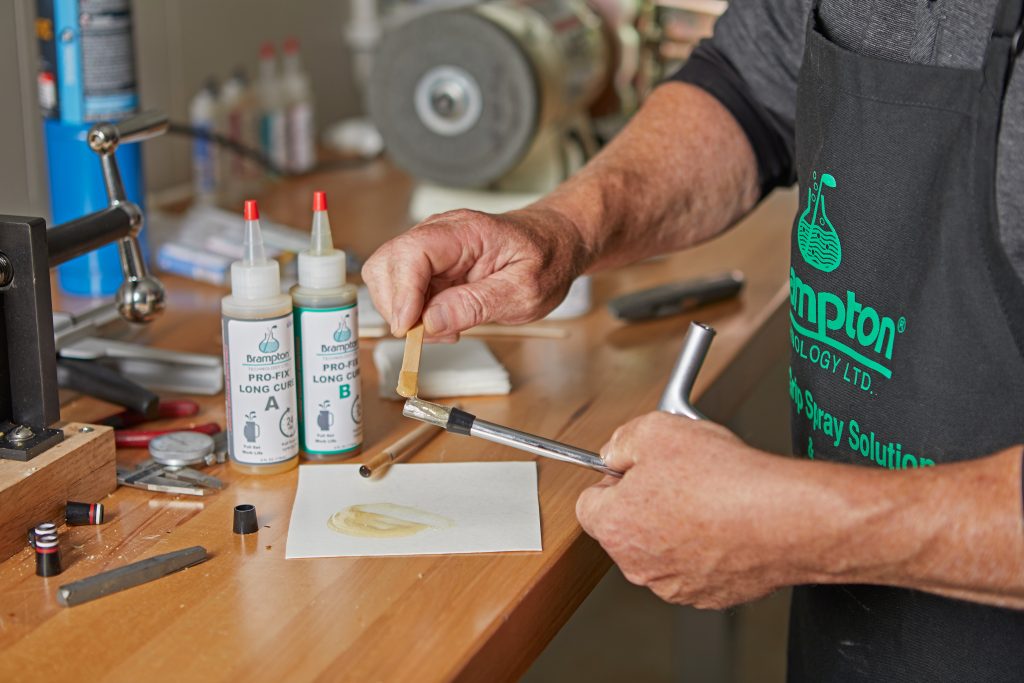
Golf epoxy is formulated to withstand the vibration, torque, and temperature swings that a swing puts on the shaft-clubhead connection, while regular epoxy suits flat, low-stress household repairs without that ongoing strain. A thinner, general formula often pools or leaves weak spots when used on club joints, leading to repairs that loosen over time. Matching the correct epoxy to the job, golf-specific for clubs and general-purpose for everyday fixes, leads to bonds that hold up longer.
Reaching for any epoxy off a hardware store shelf might seem like a quick fix for a loose clubhead or a damaged shaft. The comparison of golf epoxy vs. regular epoxy reveals a few real differences that affect how long a repair holds up.
At Brampton Technology, we formulate epoxy specifically for golf equipment. We see firsthand how the wrong adhesive choice leads to repeat repairs.
Golf Epoxy Vs. Regular Epoxy: Formula Differences
Regular epoxy gets made for general bonding tasks around the house or garage. It works fine for fixing a broken picture frame or sealing a small crack in furniture. However, it isn’t formulated with the stress that golf swings put on a club connection.
Golf club epoxy gets engineered with a few specific qualities in mind:
Vibration resistance: A golf swing sends shock through the shaft and into the clubhead connection thousands of times over the course of a season, so the bond needs to withstand that repeated stress without cracking.
Torque resistance: The twisting force during a swing puts pressure on the joint differently than a static object would ever experience.
Temperature tolerance: Clubs sit in hot car trunks and cold garages, and the adhesive needs to hold its strength across that range.
Cure consistency: Club builders need predictable working times to set shafts at the correct angle before the epoxy sets.
We recommend using Brampton PRO-FIX Golf Epoxies to rebuild your clubs, as the formula is designed to meet these exact demands.
Why Regular Epoxy Falls Short on Clubs
A standard epoxy from a hardware store might bond two surfaces together initially, but golf clubs face ongoing stress that general adhesives weren’t designed to handle. Over time, the bond can loosen, leading to a shaft that twists slightly during a swing or a clubhead that separates entirely.
Viscosity plays a part here too. Many general epoxies have a thinner consistency meant for flat surfaces or small household fixes. A shaft-and-clubhead connection requires an adhesive with sufficient body to fill the space evenly, without pooling or leaving gaps that could lead to later weakness.
Temperature swings cause additional problems for regular epoxy. A formula not built for golf use can become brittle in cold conditions or soften too much in heat, both of which shorten the life of a repair.
When Regular Epoxy Still Makes Sense
None of this means regular epoxy lacks value. It has a place for plenty of projects outside the golf bag.
A few situations where a general formula works well:
Household repairs: Fixing furniture, ceramics, or small household items doesn’t put the same stress on a bond that a golf swing does.
Craft projects: Bonding materials for hobbies or DIY work rarely involves repeated torque or vibration.
Light-duty fixes: Quick repairs around the garage or workshop that don’t face ongoing mechanical stress.
For these kinds of tasks, our multi-purpose epoxy handles a wide range of surfaces and materials without needing a specialized formula. It’s a dependable option to keep on hand for everyday fixes that don’t involve club building.
Choosing the Correct Epoxy for the Job
Picking between the two comes down to what the repair needs to withstand over the long term. A clubhead reattachment or shaft installation calls for golf club epoxy formulated for that specific stress. A household project with no ongoing torque or vibration can usually get by with a general formula.
Cost sometimes tempts builders toward a cheaper, all-purpose option for club repairs, but the savings rarely last once a bond fails mid-season. A properly matched epoxy holds up under repeated swings and seasonal temperature changes, saving time and materials down the road.
Making the Correct Choice for Your Equipment
Golf clubs face a unique set of demands that household items simply don’t encounter, and the adhesive holding them together needs to match that reality. Taking a few minutes to choose the correct formula before a repair pays off in the length of that repair.
Brampton Technology has spent decades formulating epoxy specifically for golf equipment, so builders get a product designed for the exact stress a swing puts on a connection. If you have questions about which epoxy is right for your next repair, reach out to our team today.
FAQs
Can I use regular epoxy on a golf club?
Regular epoxy can initially bond a shaft to a clubhead, but it isn’t formulated to handle the vibration and torque a swing creates. The bond can loosen over time, leading to a repair that fails sooner than expected.
What makes golf epoxy different from regular epoxy?
Golf epoxy gets engineered to resist vibration, torque, and temperature changes that come with regular use on the course. Regular epoxy is suitable for static household items that don’t experience repeated mechanical stress.
Does temperature affect golf epoxy differently than regular epoxy?
Golf clubs face hot car trunks and cold garages throughout the season, so golf epoxy is formulated to maintain its strength across that range. Regular epoxy may become brittle or soften under the same conditions.