Epoxy vs. Other Adhesives: Important Considerations
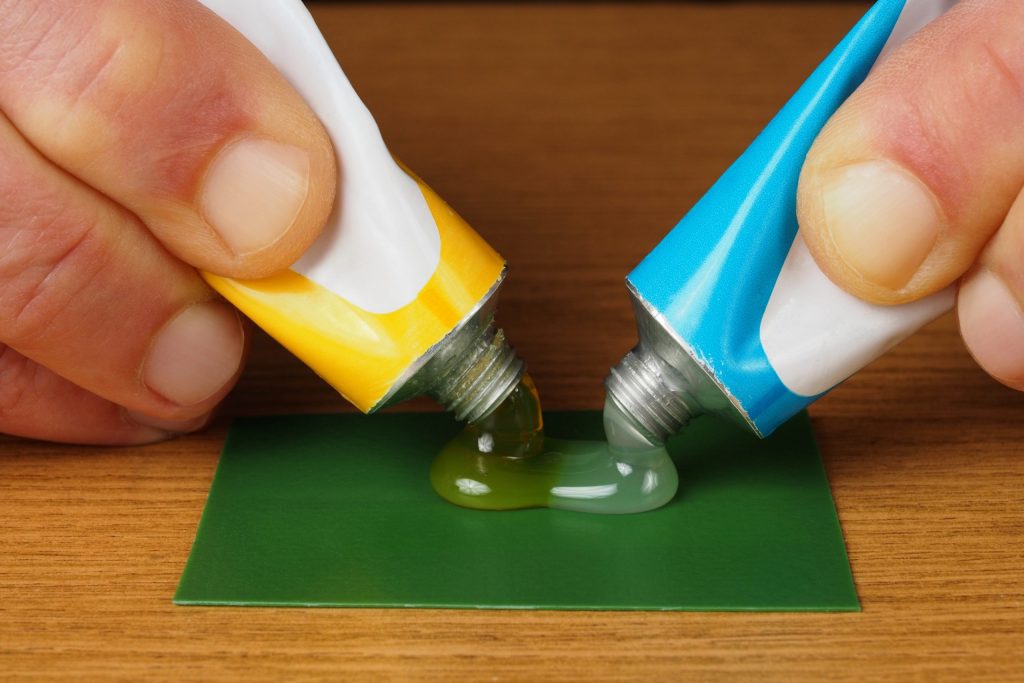
When you’re knee-deep in a DIY project or at the helm of a professional build, the adhesive you choose can make or break your day. Enter the world of glues, where epoxy stands tall among its peers. But what sets epoxy apart from other super glues, and is it always the right choice?
To help you craft a long-lasting, durable bond, let’s review some important considerations when comparing epoxy to other adhesive options.

What Other Adhesive Options Are There?
Before you zero in on epoxy, it’s worth taking a quick tour through the adhesive aisle to meet its competitors. First, there’s polyvinyl acetate (PVA) glue, often hailed as the go-to for paper and wood projects. It’s the friendly, easy-to-clean option that’s great for school projects and quick fixes around the house.
Then there’s cyanoacrylate, also known as super glue. This one’s the speed demon of the bunch, setting in seconds and promising a bond that’s tough to break. It’s perfect for those minor emergencies that need a fast fix.
Silicone adhesives round out the competition with flexibility and waterproof prowess, making them ideal for outdoor projects and bathroom repairs. Whether it’s the quick fix, the waterproof seal, or the straightforward craft project, there’s a glue for every task.
How Do They Compare to Epoxy Resin?
Starting with PVA, it’s your school project hero; it’s easy to apply, dries clearly, and is safer for children to use. However, put it up against moisture or heavy-duty tasks, and it’ll wave the white flag. Cyanoacrylate, the marvel of instant fixes, swoops in to save the day when you’re in a pinch. But it’s downside? A lack of flexibility and a propensity for developing a white fogging effect on surfaces, which is a phenomenon known as blooming. Silicone adhesives boast impressive flexibility and water resistance, making them the favorite for seals and outdoor usage. However, silicone struggles with paintability and can be a bit of a hassle to clean up.
On the other hand, epoxy stands out with its formidable combination of strength, durability, and chemical resistance, making it the go-to for projects demanding a long-lasting bond. It requires more preparation and patience, but the results speak for themselves—a permanent, formidable bond capable of withstanding the tests of time and environment. Whether you’re dealing with metals, ceramics, or plastics, epoxy doesn’t just join materials; it fuses them.
Which Option Is Right for Your Project?
When comparing epoxy to other adhesives, it’s important to consider your project’s strength, durability, and versatility needs. If your endeavors are artistic, involving materials like wood, paper, or fabric, PVA glue might be your best ally. For those moments when you’re in a rush or faced with a minor repair emergency, cyanoacrylate can be a lifesaver. On the other hand, if your project will face the elements or needs a seal in damp environments, silicone adhesives offer flexibility and waterproof capabilities.
Each adhesive has its pros and cons, but if you need a bond that won’t waver and can withstand the test of time, epoxy resin adhesives are your go-to. At Brampton Technology, we offer a range of high-quality epoxy resin adhesives that cater to different needs and applications. Whether you’re a DIY enthusiast or a professional craftsperson, our adhesives are up to the challenge of your projects.